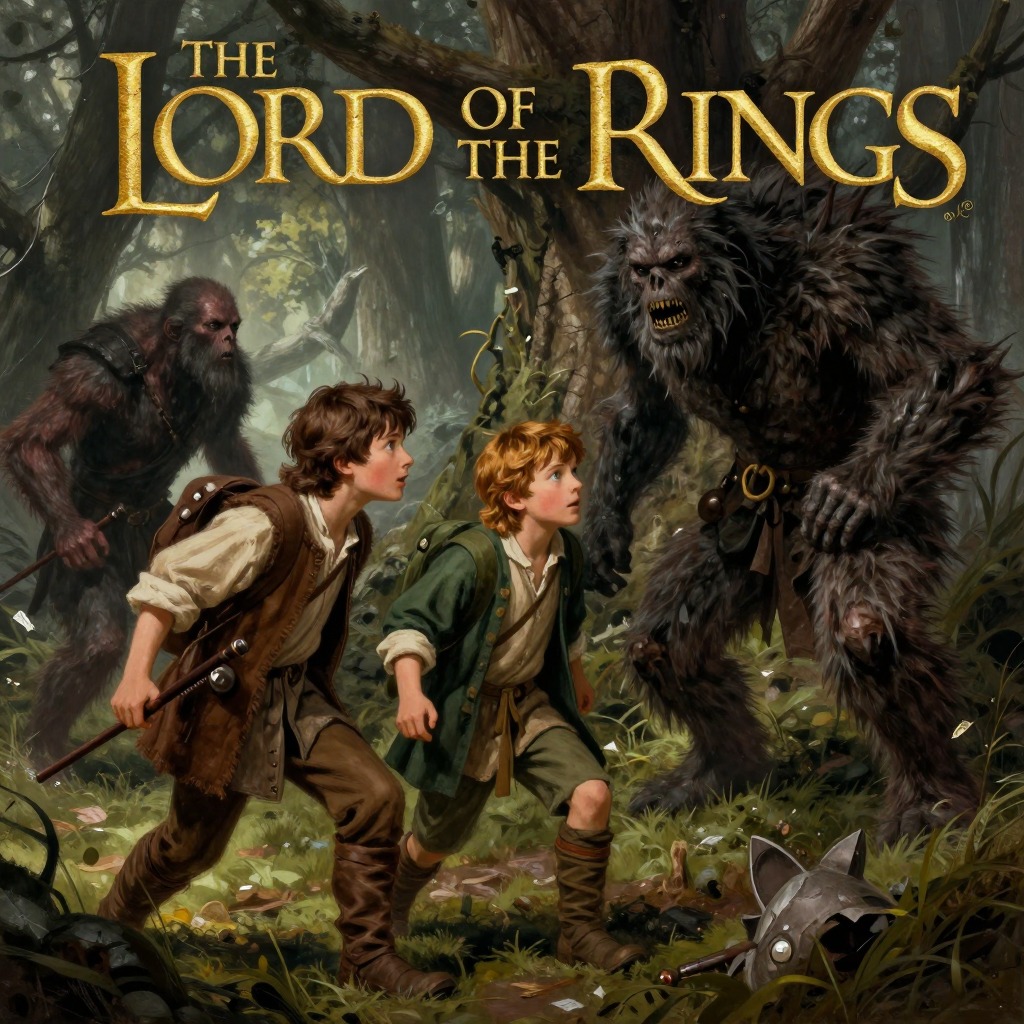
Orcs
Orcs are a foul and numerous race, the most common servants of the Dark Powers in Middle-earth. They are not a natural people but were bred by Morgoth in the Elder Days, and later by Sauron, in mockery of the Elves. In the Third Age, they serve as the primary soldiers and laborers of the Enemy, infesting the Misty Mountains, Mordor, and Isengard. Their nature is wholly evil: they delight in destruction, torture, and slaughter, and they hate all other living things, including their own kind. Despite their brutishness, they are cunning and capable of great cruelty, and they are organized into various breeds and tribes, each with its own characteristics and allegiances.
Breeds and Hierarchies
The Orcs of the Third Age are not a single, uniform people. The most common are the smaller, snaga-like Orcs, often called goblins, who dwell in the Misty Mountains and the northern lands. These are the descendants of the Orcs who fought in the War of the Dwarves and Orcs, and they are generally less disciplined and more fearful of the sun. A far more dangerous breed is the Uruk-hai, a large, powerful, and fearless type of Orc bred by Saruman in Isengard. The Uruk-hai are described as "fighting Uruk-hai" and are capable of marching by day, unlike many other Orcs. They are armed with broad-bladed swords and great bows, and they serve the White Hand of Saruman with a fanatical loyalty. Another distinct breed is the Mordor Orcs, who serve Sauron directly and bear the emblem of the Red Eye. These include the crook-legged, long-armed Grishnákh and his kind, who are more treacherous and often at odds with the Isengarders. The hierarchy among Orcs is brutal and based on strength and fear, with captains like Uglúk and Shagrat ruling through violence and intimidation.
Origins and Nature
The Orcs were first bred by the Dark Power Morgoth in the Elder Days, and they are described as a "mockery" of the Elves. They have no language of their own, instead using a debased form of the Common Speech or the Black Speech devised by Sauron. They are filled with malice and hatred, and they delight in wanton destruction, as seen in their felling of trees in Fangorn Forest and their burning of the fields of Rohan. They are also notoriously quarrelsome, often fighting among themselves over spoils or commands. This internal strife is a recurring weakness, as seen in the conflict between the Isengarders and the Mordor Orcs over the captured hobbits, and in the deadly brawl between Shagrat and Gorbag in the Tower of Cirith Ungol. Despite their numbers and ferocity, this lack of unity often proves their undoing.
Role in the War of the Ring
Orcs are the primary fighting force of both Sauron and Saruman. They serve as the rank-and-file soldiers in the great battles of the War of the Ring, from the assault on Helm's Deep to the siege of Minas Tirith and the final battle at the Black Gate. They are used as shock troops, laborers, and torturers. Their cruelty is legendary, and they are responsible for countless atrocities, including the murder of Boromir, the capture and torment of Merry and Pippin, and the destruction of the beautiful woods of Ithilien. They are also used as spies and scouts, and their presence is a constant source of fear and dread for the Free Peoples. The Orcs are ultimately a tool of evil, and their fate is tied to that of their masters. When Sauron is destroyed, the Orcs are thrown into confusion and despair, many of them slaying themselves or fleeing into hiding.
Weaknesses and Fears
Despite their strength and numbers, Orcs have several notable weaknesses. They are generally afraid of the sun, though the Uruk-hai of Isengard have been bred to endure it. They are also superstitious and easily frightened by displays of power, such as the light of Gandalf or the Elven-blades. Their own internal treachery and lack of discipline often undermine their effectiveness. They are also vulnerable to the Elven-made weapons, such as the swords from the Barrow-downs, which are specifically enchanted to harm them. Their fear of the Elves and their magic is a recurring theme, and they are often routed by the mere appearance of an Elf-lord or a Ranger of the North.